Keepers of the Forest: The Batwa Legacy
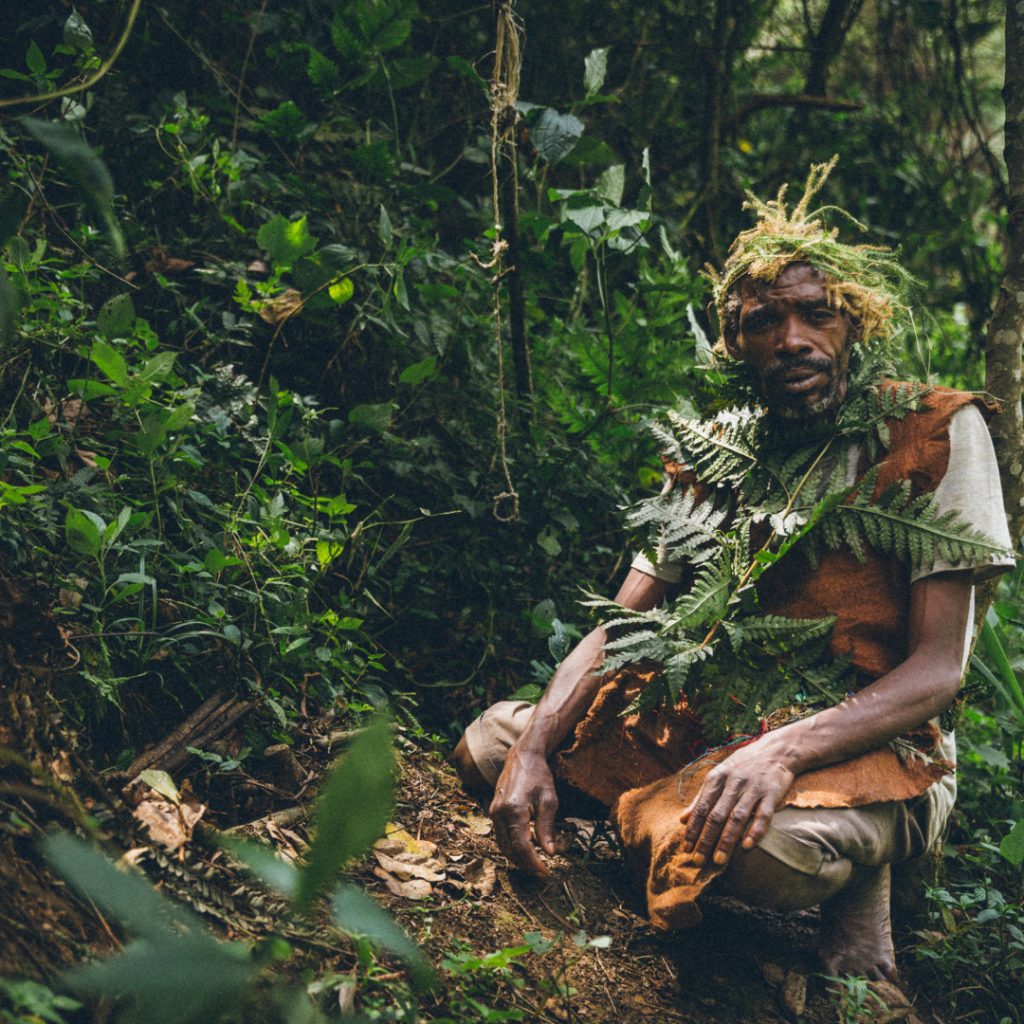
Lorna Okeng Atim and Emmanuel Rukundo are NGFP 2024 Fellows from Uganda and contributors to the Futures Methods from Around the World (FMAW) project. Their project, Keepers of the Forest: The Batwa Legacy, uses virtual reality and immersive storytelling to bring forward the Batwa people’s knowledge, heritage and relationship with the forest, exploring Indigenous wisdom as a living practice for climate action and conservation. Following their first year in the Fellowship, they were selected as winners of the New Horizon Fund, a USD 10,000 award supporting Fellows to take promising futures work into its next chapter.
In this conversation, they reflect on the journey behind Keepers of the Forest and share how Indigenous knowledge, creativity and community have shaped the project’s evolution and what the support of the NGFP community and New Horizon Fund has helped unlock.
What inspired Keepers of the Forest?
Keepers of the Forest: The Batwa Legacy (2025) is an immersive virtual reality (VR) experience centred on the Batwa people, the ancestral custodians of the Bwindi and Virunga forests, home to the world’s only mountain gorillas. Rooted in century-old philosophies, the work reframes indigenous wisdom as a futures technology where systems of relational intelligence have sustained biodiversity for millennia in a world shaped by accelerating climate change.
“What if the future has always lived in the forest? What if we are only just learning how to listen?”
The project is really an invitation to all of us to rethink conservation as collective work that is deeply relational and whose tools are in place and not necessarily new. Through VR and spatial storytelling, we wanted people to feel part of the forest and understand our collective role as coauthors with nature.
At Keepers XR Studio, we create immersive worlds that reimagine archives as living ecosystems. Our work sits at the intersection of art, technology, indigenous heritage and futures, using extended reality (XR) as a medium for storytelling, research and cultural restitution.
How has your journey evolved since the NGFP Fellowship?
Fresh into the NGFP Fellowship, we presented the project concept at the Dubai Future Forum (DFF) 2024. It existed then only as an idea captured on two slides and a great deal of reckless optimism. DFF 2024 was where this work was first spoken out loud as an instrument for alternative futures. We wondered:
“What can the endangered Batwa people’s Indigenous conservation knowledge — their symbiotic relationship with forests — and century long intangible heritage practices teach us about humanistic dimensions to climate change mitigation, and serve as alternative models to guide global efforts and approaches in combating the climate crisis and preserving ecosystems?”
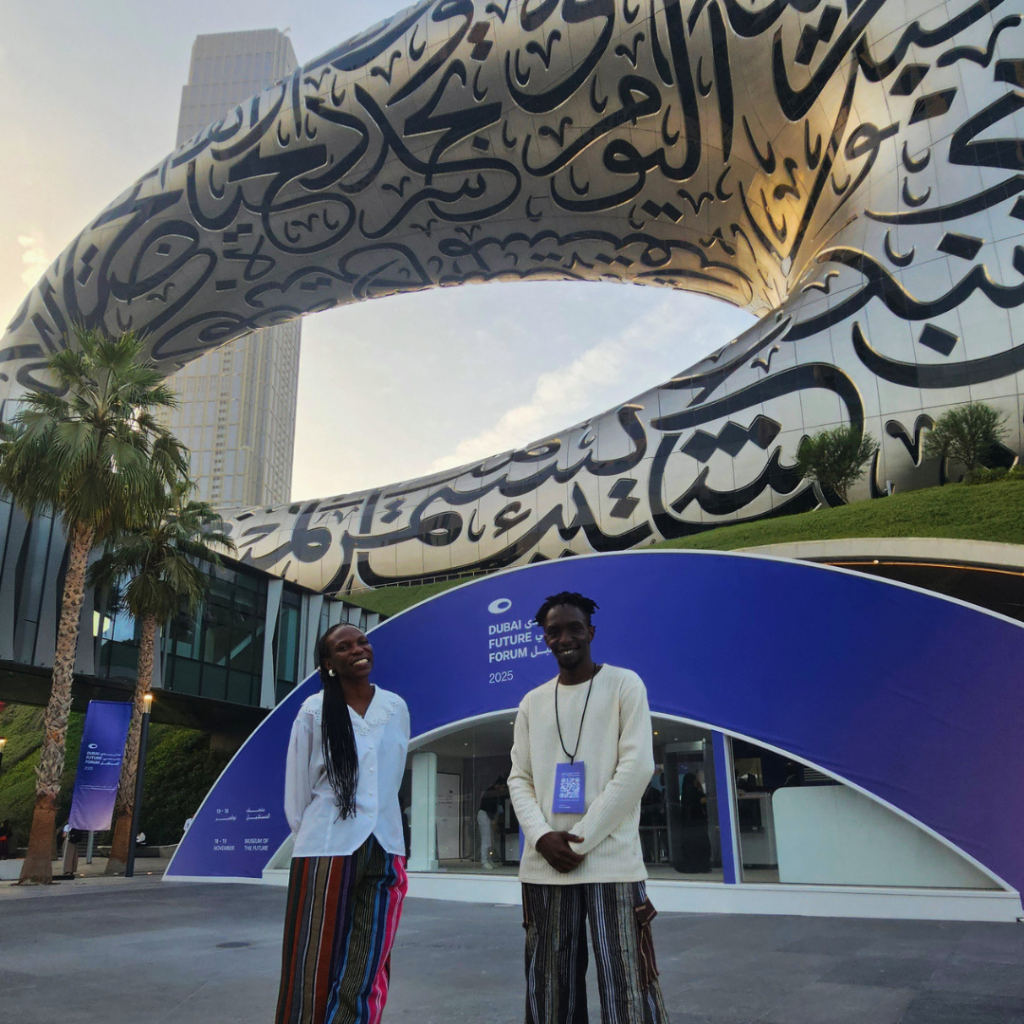
In 2025, being able to return to DFF with an immersive exhibition that brought something living and tangible to life was a full-circle moment. It was profoundly moving, and we do not say this lightly, to witness people from across the world see their own communities reflected in this work. Over 150 people experienced Keepers of the Forest through the beautifully curated VR immersive installation and many shared how emotionally resonant it was and how it felt like being invited into a shared responsibility. That was one of the most moving parts of being at DFF 2025.
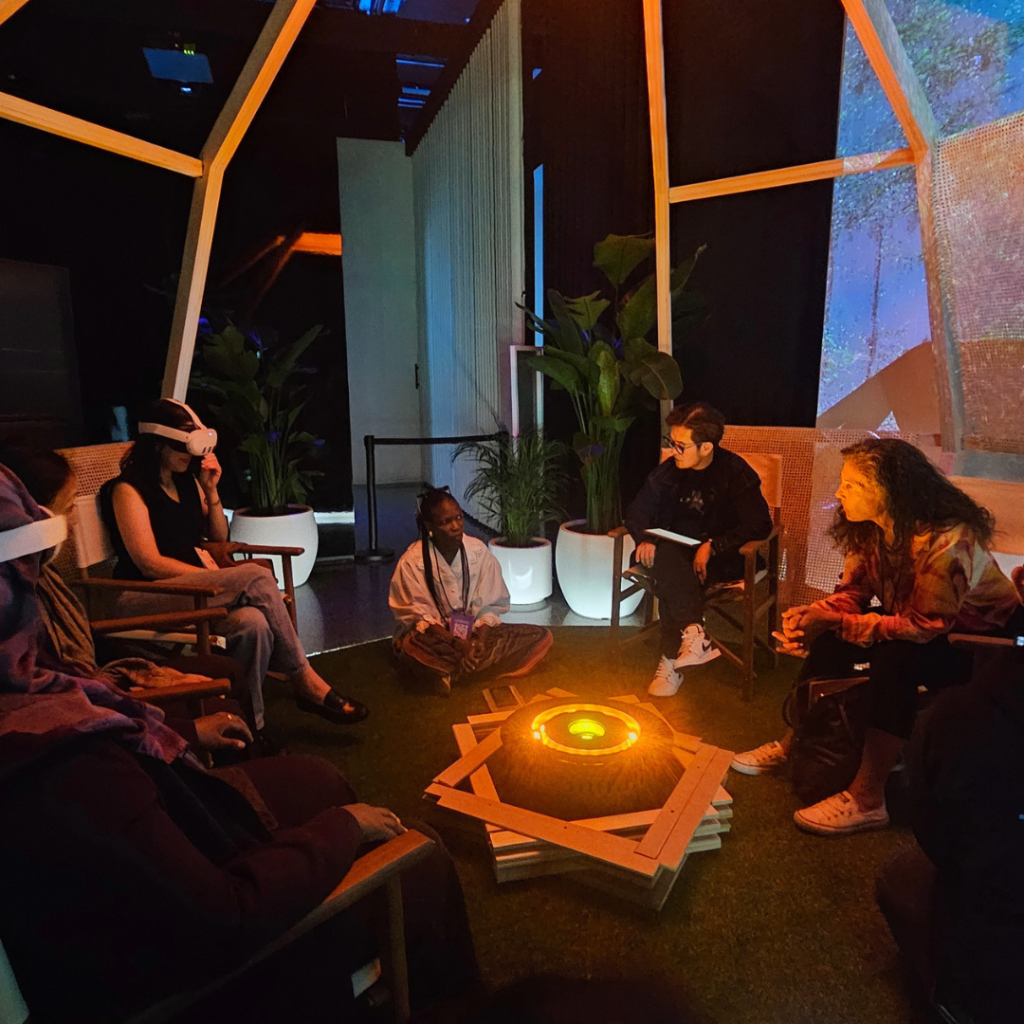
The exhibition itself was set up as a kind of “living museum,” and a hacked environment digiphysical homestead of fire-scorched clay, fallen leaves, so that moving through it felt more like entering the Batwa homestead.
Keepers of the Forest has since been selected for the New Images Festival Distribution Market in Paris, screened at Pearl of Africa Tourism Expo, Creation Africa Forum in Lagos, November Numérique in Accra, Go Digital Fest in Abuja, reaching over 600 direct viewers, and sparked new commissioned projects, including curating the Ethical Loaning and Restitution Project for the Uganda Museum.
“It existed then only as an idea captured on two slides and a great deal of reckless optimism.”
When we began this journey, it started as a story about one community, the Batwa, and their symbiotic relationship with the forests of the Bwindi and Virunga ranges. We were curious about how indigenous knowledge and what we kept calling ancestral intelligence (a.i.) could be understood as a real, living futures practice in climate mitigation. As the work grew, we realised it was not just the Batwa’s story but the story of countless communities across the Global South, across Africa, the Amazon, the Pacific and beyond, who hold ancestral wisdom the world urgently needs.
What has winning the New Horizon Fund enabled?
Our long-term vision is to grow Keepers of the Forest into a Global South-to-South Living Museum, an immersive, travelling experience that captures these alternative ancestral intelligences. These are living systems of knowledge that show how humans and nature can exist in balance.
With the New Horizon Fund, we will prototype this next phase re-centring indigenous philosophies as blueprints for climate resilience and collective futures by developing the first chapter of the Living Museum in Uganda, building partnerships with indigenous artists and designing immersive tools that allow new generations to co-author these stories.
“As the work grew, we realised it was not just the Batwa’s story but the story of countless communities across the Global South..”
And we’re guided by two questions that continue to shape everything we do:
What if its keepers were the first futurists?
What if the future has always lived in the forest? What if we are only just learning how to listen?
Projects like this are hard to fund. Futures work in Africa, especially where it blends art, heritage and alternative futures often falls between categories. It’s too speculative for traditional cultural grants while too creative for science funding and too radical for institutional comfort. The New Horizon Fund therefore allows us to bring this to life.
Reflections
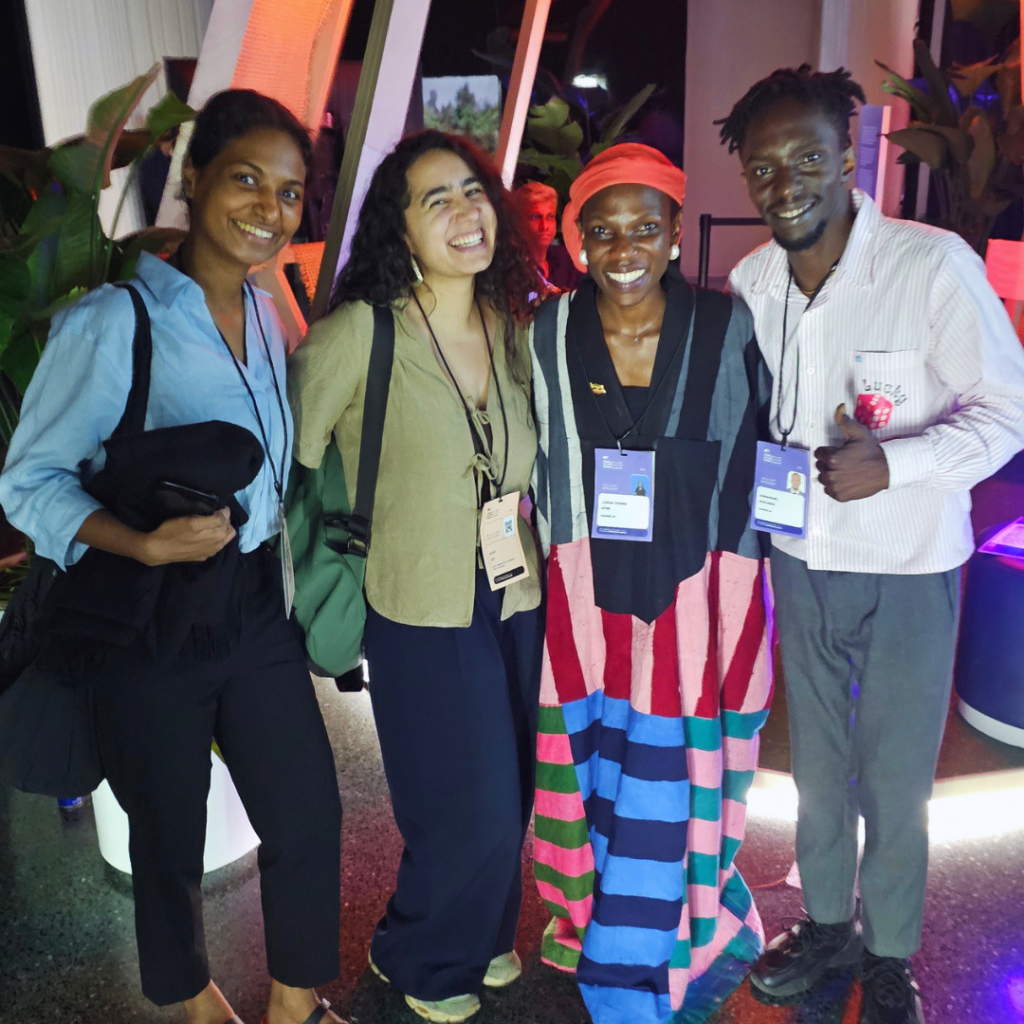
This work would not have been possible without the extraordinary support, belief and network-weaving of the NGFP community from the Storytelling Hub to the Futures Methods from Around the World project, as well as the generous support of partners like the French Embassy in Uganda and the Dubai Futures Forum curators. From the early belief when this was just an idea, this wonderful network of believers held this work long before it had a form. Because of that, Keepers of the Forest has now travelled far beyond where it began.
“We are not waiting for someone else to come and fix the future. We are the ones we have been waiting for.”
In Ayi Kwei Armah’s 1968 fictional novel The Beautyful Ones Are Not Yet Born, there was a sense of waiting, of hoping for a future generation that would finally arrive and set things right. After a year in the NGFP Fellowship and network — from joining the SOIF Ignite Philanthropy SPROUT Next Generation Systems Leaders Fellowship to exhibiting at the DFF 2025 — we are most confident about one thing, that the beautiful ones are already here. They have already been born. We’ve seen them, on a podcast chat with fellow NGFPer Marion, to leading Sub Saharan Africa research on the FMAW project, to becoming a focal point for the upcoming Alternative and Indigenous Futures Hub and all the optimistic and courageous people we’ve met in the futures space. We’ve seen a glorious republic of them in small, generous acts, in brave questions, in people choosing to care amidst the uncertainty. We are not waiting for someone else to come and fix the future. We are the ones we have been waiting for thanks to the NGFP network.